- June 9, 2025
- by keerthivasan
- Uncategorized
- 0 Comments
Search Engine Optimization (SEO) is essential for boosting your website’s visibility and driving organic traffic. But to get real results, you need to understand the two main types of SEO: On-Page and Off-Page. Both play a crucial role—but in different ways.
In this blog, we’ll break down the key differences between On-Page and Off-Page SEO, and help you decide where to focus your efforts.
✅ What is On-Page SEO?
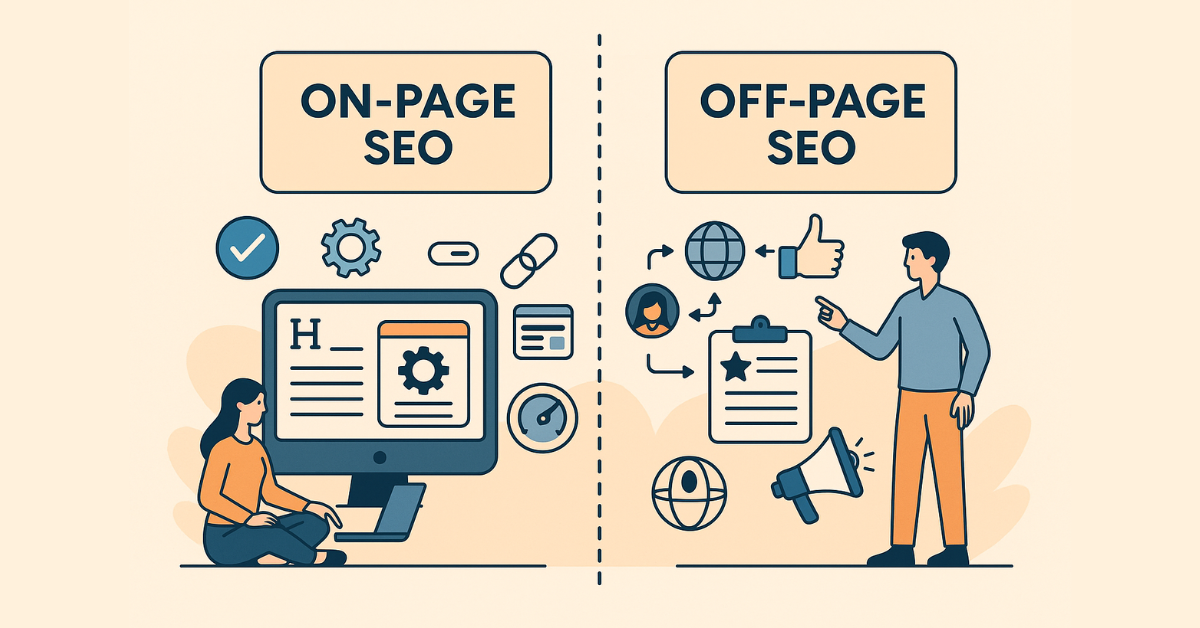
On-Page SEO refers to the optimization actions you take within your website to help search engines understand your content and rank it better.
Key Elements of On-Page SEO:
- Title Tags & Meta Descriptions – Accurately describe the page content with relevant keywords.
- Header Tags (H1, H2, H3…) – Structure your content to improve readability and hierarchy.
- Keyword Optimization – Use target keywords naturally in your content, titles, and URLs.
- Internal Linking – Link to other relevant pages on your site to improve navigation and SEO value.
- Image Optimization – Use relevant alt text and compressed image files for faster load times.
- Mobile-Friendliness – Ensure your site works smoothly on smartphones and tablets.
- Page Speed – Optimize loading times using caching, compression, and efficient code.
- Content Quality – Provide valuable, original, and well-structured content that satisfies user intent.
🟩 In short: On-Page SEO is all about what you control on your own site.
✅ What is Off-Page SEO?
Off-Page SEO refers to activities done outside your website to boost its authority, trust, and ranking in search results.
Key Elements of Off-Page SEO:
- Backlinks – Links from other websites to yours. High-quality, relevant backlinks improve your authority.
- Social Signals – Likes, shares, and engagement on social media can drive traffic and indirectly boost rankings.
- Guest Blogging – Writing articles for other sites helps build backlinks and expose your brand to new audiences.
- Brand Mentions – Even without links, mentions of your brand name online can help Google recognize your credibility.
- Influencer Outreach – Collaborating with influencers to gain more visibility and potential backlinks.
🟥 In short: Off-Page SEO is about how others perceive and reference your website.
🔍 On-Page vs Off-Page SEO: What’s the Difference?
| Feature | On-Page SEO | Off-Page SEO |
| Location | Inside your website | Outside your website |
| Control | Fully under your control | Depends on others (e.g., backlinks, shares) |
| Focus | Content quality, site structure, user experience | Authority building, trust signals |
| Tools | Yoast SEO, RankMath, Google PageSpeed | Ahrefs, SEMrush, Moz, BuzzSumo |
🎯 What Should You Focus On?
Both are important—but if you’re just starting out, focus on On-Page SEO first. Here’s why:
✅ Start with On-Page:
- It’s fully in your control.
- It builds a strong foundation for Off-Page efforts.
- Without good content and structure, even backlinks won’t help.
✅ Grow with Off-Page:
- Once your site is well-optimized, invest time in building quality backlinks.
- Engage with communities and promote your content.
- Monitor your site’s authority using tools like Moz’s Domain Authority or Ahrefs’ Domain Rating.
💡 Final Tips:
- Don’t choose one over the other—combine both for best results.
- Always create content that’s valuable for users first, optimized for search second.
- Stay updated with Google’s algorithm changes and SEO trends.
🔚 Conclusion
Understanding the difference between On-Page and Off-Page SEO is key to building a successful digital presence. On-Page SEO sets the stage with high-quality content and technical performance, while Off-Page SEO builds credibility and authority through backlinks and engagement. To rank higher and grow organically, you need both. Start by optimizing what you control, then expand your reach with smart, ethical Off-Page strategies.