- May 27, 2025
- by BALAJI R H
- Uncategorized
- 0 Comments
🔍 What is Digital Marketing Analytics?
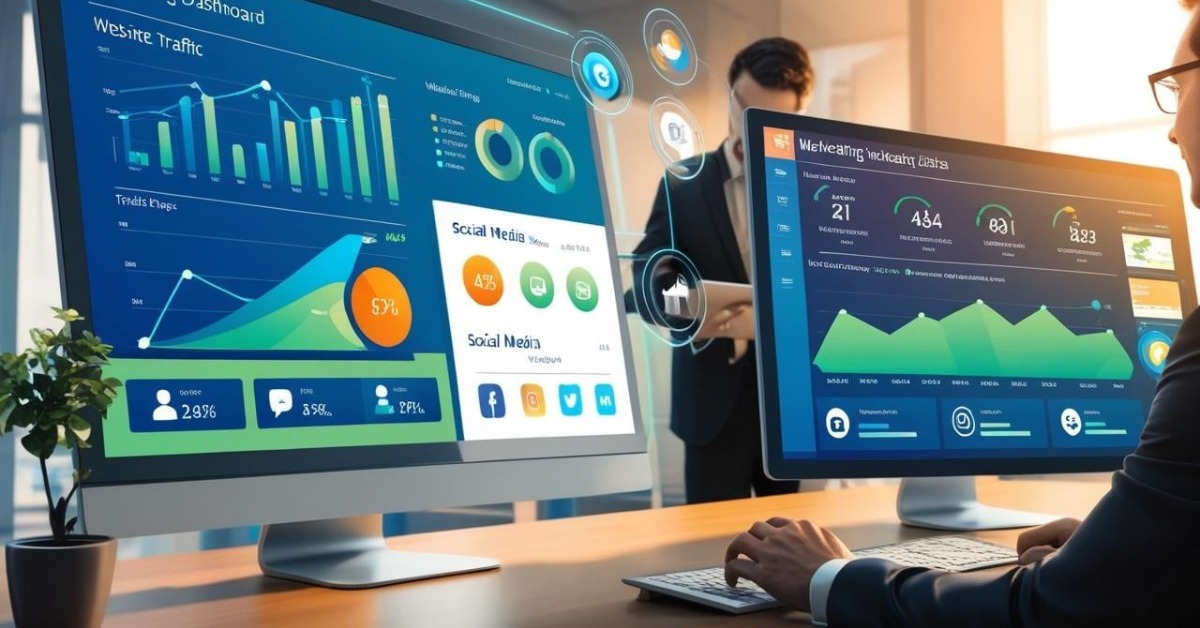
Digital marketing analytics is the practice of measuring, managing, and analyzing performance data from your online marketing efforts. It helps marketers understand user behavior, track ROI, and make smarter decisions to optimize campaigns. In today’s competitive digital space, relying on gut feeling isn’t enough — data is your most powerful ally.
📊 Why It Matters in 2025
With the rise of AI, automation, and privacy-first user tracking, 2025 is all about making your data work smarter, not harder. Whether it’s tracking your website traffic, social media performance, or email conversions, analytics gives you the clarity to refine your approach, reduce ad spend waste, and increase ROI.
🛠️ Top Tools to Leverage
Here are some essential tools to help you stay ahead:
- Google Analytics 4 (GA4): Unified view of web and app data with privacy-first tracking
- Looker Studio (formerly Data Studio): Build custom dashboards and visual reports
- Hotjar: Visual behavior analytics with heatmaps and session recordings
- Semrush: In-depth SEO, PPC, and competitor analysis
- HubSpot: Integrated CRM and marketing analytics suite
📈 Metrics That Matter Most
Focus on key performance indicators (KPIs) that align with your business goals:
- Traffic Sources: Understand where your visitors are coming from (Organic, Paid, Direct, Referral)
- Bounce Rate & Session Duration: Measure engagement quality
- Click-Through Rate (CTR): Gauge ad and email effectiveness
- Conversion Rate & Cost Per Acquisition (CPA): Determine campaign efficiency
- Return on Ad Spend (ROAS): Evaluate profitability
📊 How to Build a Data-Driven Strategy
- Define Your KPIs: Link them directly to your business objectives
- Set Up Proper Tracking: Ensure tools like GA4 and conversion pixels are correctly installed
- Analyze & Interpret Data: Go beyond vanity metrics; look for actionable insights
- A/B Test Campaigns: Continuously experiment with elements like CTA, creatives, and copy
- Create Reports: Use dashboards to share performance and trends with stakeholders
⚡ Common Mistakes to Avoid
- Chasing vanity metrics like likes and impressions with no real impact
- Ignoring mobile traffic behavior and user journeys
- Failing to connect platforms like CRM and ad networks for holistic insights
🚀 Conclusion
In 2025, digital marketing success hinges on the ability to interpret and act on data effectively. By leveraging powerful tools, focusing on meaningful metrics, and building a data-driven culture, marketers can make smarter decisions, reach the right audience, and achieve better results.
Stay ahead of the curve. Make data your superpower.