- June 1, 2025
- by keerthivasan
- Content, SEO
- 0 Comments
In the ever-evolving world of digital marketing, one thing remains constant: effective keyword research is the backbone of successful SEO. Whether you’re running a blog, managing an e-commerce site, or offering services online, understanding how to find and use the right keywords can make or break your visibility on search engines.
If you’re ready to go beyond the basics and learn how to do keyword research for SEO like a pro, this guide is for you.
🔍 What is Keyword Research?
Keyword research is the process of finding and analyzing the words and phrases that people type into search engines. These terms help you understand what your audience is looking for and guide your content strategy, SEO optimization, and paid ad targeting.
When done right, keyword research allows you to:
Drive qualified traffic to your site
Understand user intent
Beat your competition in search rankings
Create content that converts
🧠 Step 1: Understand Your Audience & Niche
Before diving into tools, take a moment to think like your target audience:
What problems are they trying to solve?
What terms would they use to search for your product or service?
Are they beginners or experts?
Example:
If you run a fitness blog for beginners, your audience might search for:
“easy home workouts”
“how to lose weight fast”
“beginner exercise routine”
Start with a list of seed keywords — broad topics or phrases that represent your niche.
🔧 Step 2: Use Keyword Research Tools
Now it’s time to go pro. Use tools to expand your seed list, evaluate search volume, and analyze competition. Here are some of the most popular tools:
✅ Free Tools
Google Keyword Planner – Great for basic search volume estimates
Ubersuggest – Offers keyword suggestions and competition data
AnswerThePublic – Visualizes questions people ask around a topic
Google Trends – Shows keyword popularity over time
✅ Paid Tools
Ahrefs – In-depth keyword difficulty, SERP analysis, competitor keywords
SEMrush – Keyword gaps, topic research, content suggestions
Moz Keyword Explorer – Prioritization metrics and SERP features
Keywords Everywhere – Browser extension with real-time data
Use these tools to gather:
Search Volume – How many people search for the keyword each month
Keyword Difficulty (KD) – How hard it is to rank
CPC (Cost Per Click) – Indicates commercial value
SERP Features – Know what shows up: videos, featured snippets, etc.
🎯 Step 3: Focus on Search Intent
Google’s algorithm is smart—it prioritizes relevance and intent over just matching keywords. So, it’s important to know what the searcher is actually looking for.
🔍 Types of Search Intent:
Informational – Looking for knowledge (e.g. “how to bake a cake”)
Navigational – Trying to find a website (e.g. “YouTube login”)
Transactional – Ready to buy or act (e.g. “buy running shoes online”)
Commercial Investigation – Comparing options (e.g. “best SEO tools 2025”)
Pro Tip: Match your content type to the intent. Don’t write a blog post targeting a keyword with transactional intent—use a landing page instead.
🧩 Step 4: Analyze Your Competitors
Check what’s already ranking for your target keywords. This gives you insight into:
Content format (listicles, videos, long-form articles)
Word count
Keyword usage
Backlinks
How to do it:
Google your target keyword
Analyze the top 5 results
Use Ahrefs or SEMrush to see what keywords your competitors rank for
Find gaps where you can create better or more focused content
📌 Step 5: Choose the Right Keywords
After collecting and analyzing data, prioritize your keywords. Here’s how:
📊 Use a Balanced Mix:
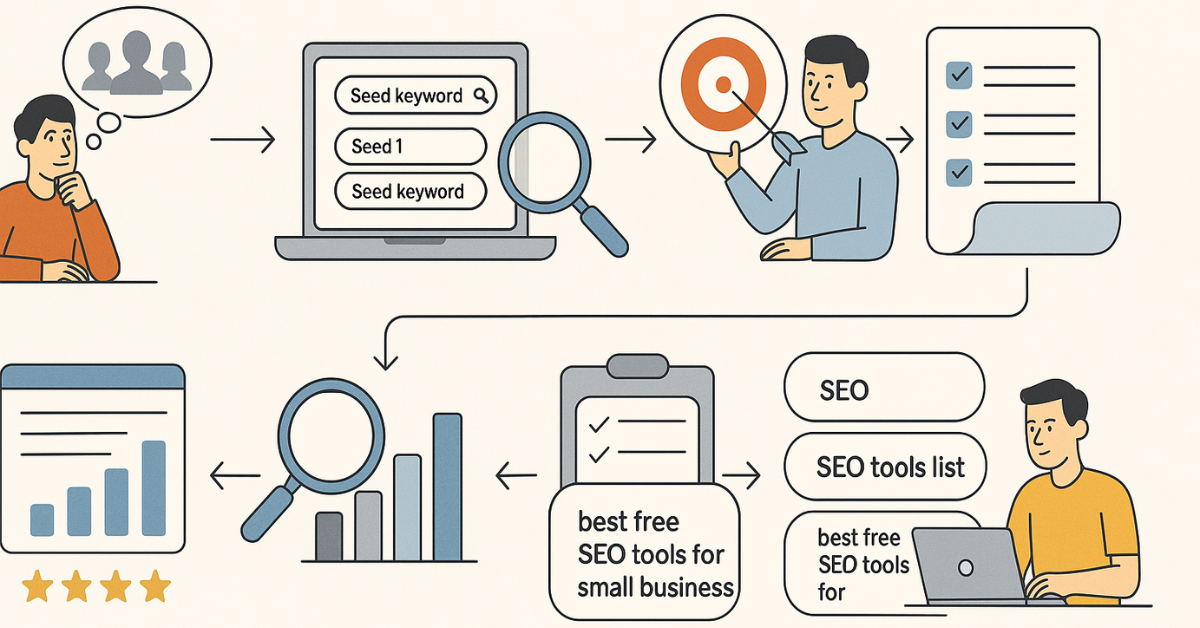
Head Terms (1-2 words): High volume, high competition (e.g. “SEO”)
Body Keywords (2-3 words): Moderate competition (e.g. “SEO tools list”)
Long-Tail Keywords (4+ words): Low competition, high intent (e.g. “best free SEO tools for small business”)
✔ Prioritize Keywords Based On:
Search volume
Keyword difficulty
Relevance to your content
Intent alignment
Your ability to compete (domain authority, content quality)
✍ Step 6: Create Optimized Content Around Your Keywords
Once you’ve selected your target keywords, it’s time to build content that ranks.
Optimization Tips:
Use the keyword in the title, meta description, and H1
Sprinkle it naturally in your content (no keyword stuffing!)
Include related terms and synonyms (LSI keywords)
Use structured headings (H2, H3) with keyword variations
Optimize your images with alt tags
Add internal and external links
📈 Step 7: Track and Refine
SEO isn’t a set-it-and-forget-it process. Monitor your keyword performance regularly using tools like:
Google Search Console
Google Analytics
Ahrefs / SEMrush
Track:
Rankings
Click-through rate (CTR)
Organic traffic
Bounce rate
Adjust your content and keyword targeting based on the data you collect.
✅Conclusion
Doing keyword research like a pro isn’t just about finding popular search terms — it’s about understanding your audience, identifying opportunities, and creating content that meets real needs. With the right tools, strategy, and mindset, you’ll not only improve your rankings but also attract visitors who are ready to engage, convert, and become loyal customers.