- September 20, 2025
- by keerthivasan
- ai
- 0 Comments
In recent years, Artificial Intelligence (AI) has become a big part of our lives. From chatbots to image generation, AI is everywhere. One big question many people ask is:
Can AI replace human creativity in design?
Let’s look at both sides in simple words.
What is Creativity?
Creativity means making something new, unique, and meaningful. For example, when an artist paints or a designer creates a logo, they use feelings, culture, and imagination. Human creativity often comes from personal experience and emotions.
What Can AI Do in Design?
AI can do many amazing things in design:
- Generate logos in a few seconds.
- Suggest color palettes and fonts.
- Create social media posts or ad banners.
- Even design websites automatically.
Example: Tools like Canva AI, DALL·E, and MidJourney can create beautiful designs in seconds.
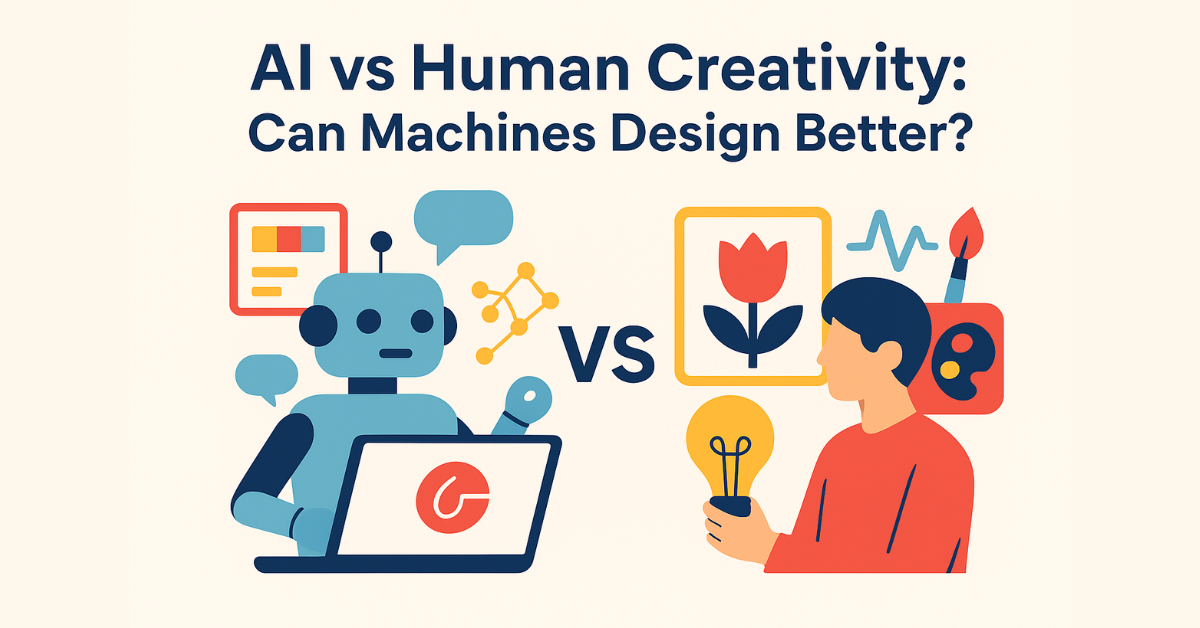
Human Creativity vs AI Creativity
Human Creativity
- Comes from emotions, culture, and personal touch.
- Adds storytelling and deeper meaning to designs.
- Can break rules to create something fresh.
AI Creativity
- Works fast and cheap.
- Can analyze huge data and trends.
- Creates multiple design options quickly.
Can Machines Really Design Better?
AI is powerful, but it lacks human feelings. For example:
- An AI can design a wedding invitation card beautifully, but it doesn’t know the love story behind it.
- AI can make a logo, but it may not understand the cultural meaning or local traditions.
So, AI can support humans, but cannot fully replace human creativity.
Best Way Forward
The best solution is not AI vs Human, but AI plus Human.
- Let AI do the boring, repetitive work (like resizing images, suggesting layouts).
- Let humans add the creativity, story, and emotions.
This teamwork can give the best designs.
Conclusion
AI is growing fast and becoming smart in design. But real creativity still needs the human mind and heart. Machines can help us, but the soul of design comes from humans.
The future of design is not about humans losing to AI. It is about working together to create better, faster, and more meaningful designs.